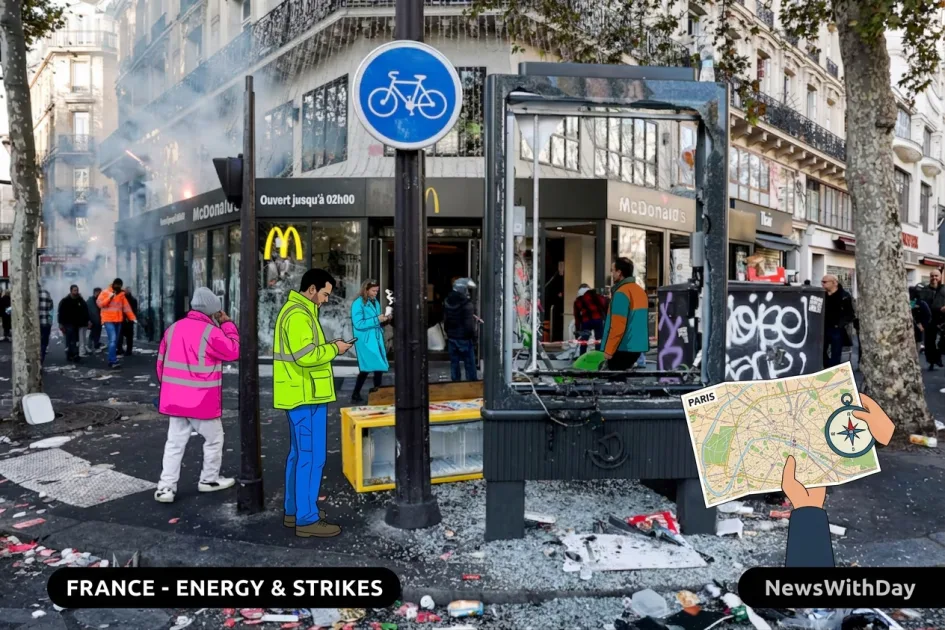
France is heading into a tense week as unions prepare a day of cross-sector strikes and demonstrations on 5 November, just as households face another increase in gas prices. Unions have called on workers, retirees and young people to take to the streets to protest cost-cutting measures in the budget, and disruption to public transport and other services is likely. The Gilets Jaunes movement has said it will join the marches, following weeks of protests involving high school students.
The cost of living is at the centre of the anger. The reference price for gas rose by 6.6 per cent on 1 November, from 182.88 to 194.90 euros per megawatt-hour including tax, after a 6.3 per cent rise in October. The energy regulator estimates that households on contracts indexed to the benchmark will pay about 12 euros more on their November bill, while those on fixed-price deals are not affected. It also expects the average annual gas bill for 2026 to be roughly 11 per cent higher than in 2025.
The government is trying to ease pressure at the pump. Prime Minister Sébastien Lecornu announced the release of 10 million barrels of diesel from strategic reserves, which officials expect to cut prices by 12 to 18 cents per litre. A decree requires distributors to pass the full reduction on to drivers. Diesel had been averaging between 2.30 and 2.40 euros per litre since early October, and TotalEnergies has already cut its price to 2.15 euros at 705 stations.